The elements of yoga have been described as Ashtanga Yoga. The ashtanga yoga has been derived from two words i.e.
Ashta which means eight and 'anga' means limbs. Hence, Ashtanga Yoga is also known as eight-limbed yoga.
According to Patanjali, the path of internal purification for revealing the Universal Self consists of the following eight
spiritual practices:
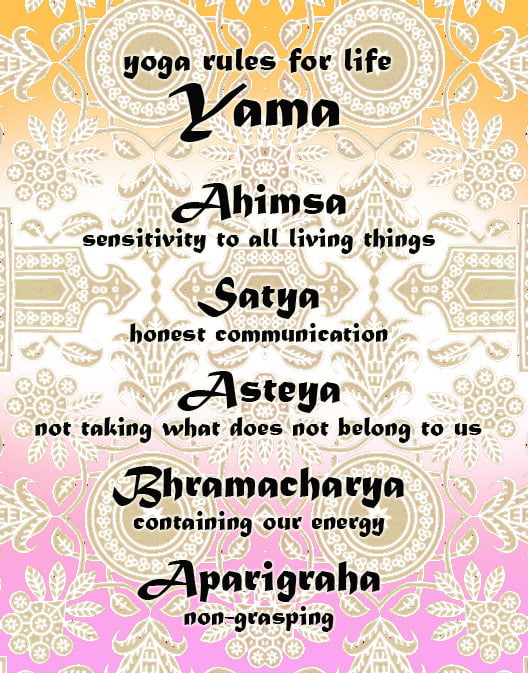
This refers to ethical discipline and has five following parts:
- Ahimsa
- Satya
- Asteya
- Brahmacharya
- Aparigah
This means non-violence. It focuses on non-killing. Ever this guides not to pain others. It has been noticed that non-
violence arises from fear and weakness. This guides a person to curb anger and lead non violent life.
It refers to truth. It is stated that if a person follows the truth, he gets fruitful results. So, it gives stress on truthfulness.
This means not stealing. A person is told not to lift anything of the person without asking him. So this guides to reduced physical needs.
This leads to celibacy. A yogi is instructed to follow a bachelor's life to preserve energy.
It refers to non-covetousness. This makes people to live simple life and should have no desire of collecting the things.
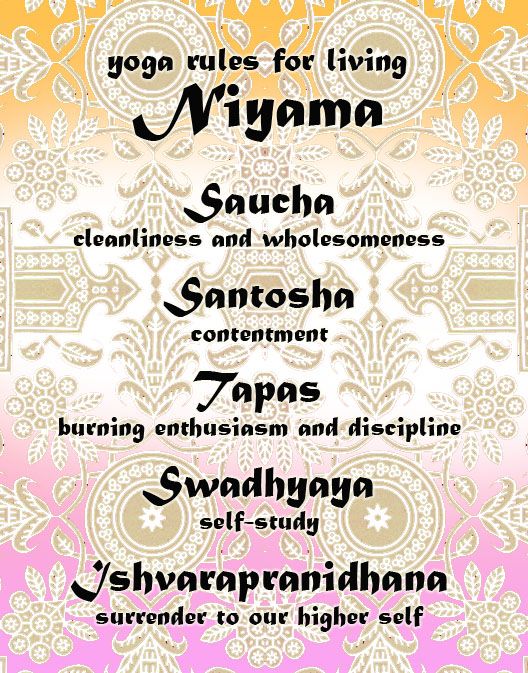
They are known as rules of conduct that are applied to individuals Patanjali listed five following Niyama:
- Shoucha
- Santosh
- Tapa
- Swadhyaya
- Eshwar Pranidhan
Purity is very essential for well-being. So, after practising of asanas lot or toxins and dirt come out of body which must be cleaned by taking bath. This aims to remove all impurities from the body.
Contentment must be induced otherwise it is difficult to concentrate on any kind of work. It is also advised to do yoga in clean air and noise-free area. For this purpose, banks of rivers are preferred.
It has been derived from a word 'tap' which means to burn. A person with the help of 'tap' can gain strength, endurance, courage and simplicity.
It is considered as the study of teachings and scriptures. In it, self, peaceful and happy.
Worship and dedication to God is preferred. A person who has faith in God never feels sorrow.
They are known as posture exercises. They are also known as yogic postures. Mainly 48 postures have been described. All the yogic asanas develop physique of the body. Since mind and body are interdependent, thus the practice or asanas is very essential to develop the body.
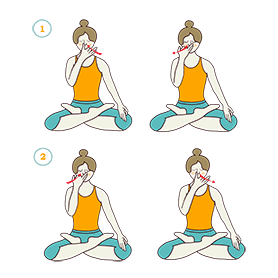
The word Pranayama comes from Sanskrit. It has two parts i.e. Prana means 'Vital force' and Ayama means the control of the 'Prana'. Through pranayama vital force can be controlled by concentration and breathing. It leads to the control and regulation of breath. The Pranayama has three phases:
- Puraka
- Rechaka
- Kumbhaka
It is inhalation of air into the lungs.
It is exhalation of air from lungs.
It a particular posture, the holding of breath is done. During this, no exhalation and inhalation is done.
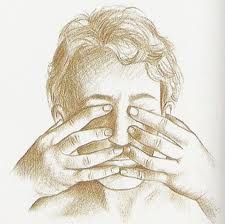
It is considered as withdrawal of senses. Since senses pull a person towards external desire of objects, the control on senses play a vital role. After controlling senses, a person attains peace.
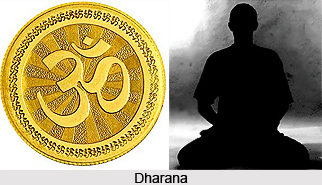
After achieving all above, now a person needs control and must have sense of complete absorption. It fixing the thinking on internal space.
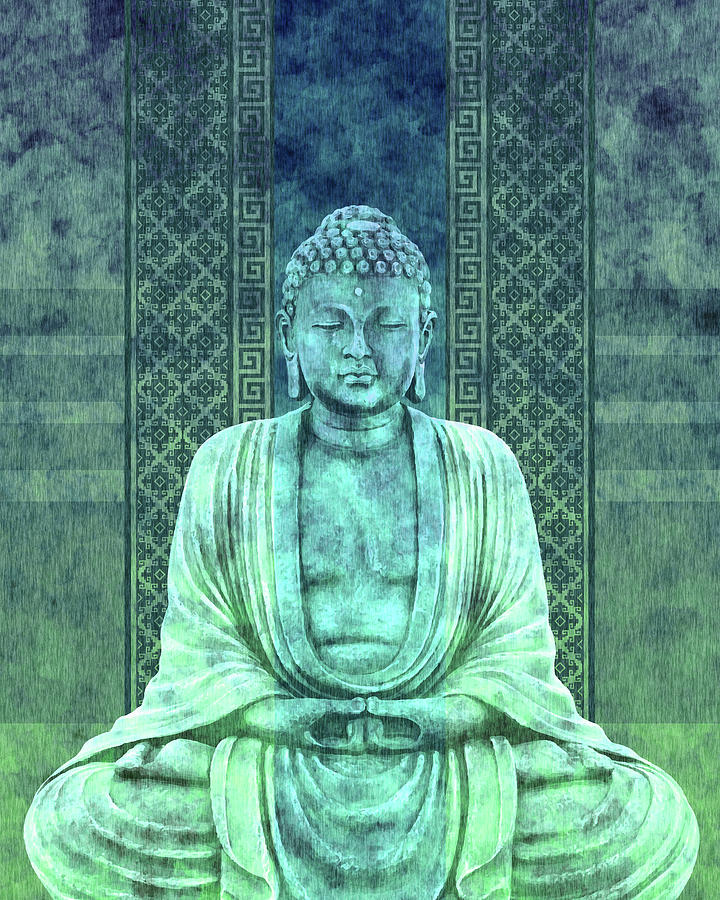
This is meditation. A person gets continuous state of dhyana.
It is when dhyana reaches a state where only the awareness of its meaning remains and even the personal identity is lost.